Buddha

Buddha

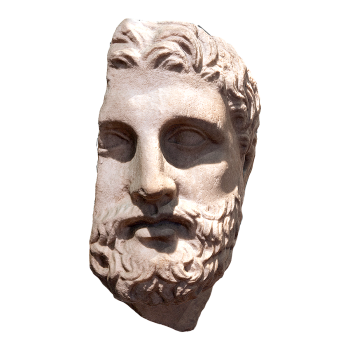
Marble statue of the head of a man with long beard

Marble statue of the head of a man with long beard

This marble statue is the head of a bearded man, possibly representing the ancestors of King Mausollos. This work was discovered around 350 BC in the main sculptural sediment north of the North Peripolis Wall, carved from marble. This statue is now on display at the British Museum.
Lucius relief bust

Lucius relief bust

This Roman stone tomb relief depicts Lucius Antius Philomorsus, his daughter, and his wife. The relief is depicted in the style of the Roman Republic. The production date of this work is from 15 BC to 5 AD, and the dimensions are: height of 61 centimeters, width of 165 centimeters, and depth of 18.5 centimeters. This relief is currently housed in the British Museum.
Shang Siyang Bronze Square Zun

Shang Siyang Bronze Square Zun

The Shang Siyang Bronze Square Zun is a bronze ritual vessel and sacrificial item from the late Shang Dynasty. Unearthed in 1938 on the mountainside of Zhuanerlun, Yueshanpu, Huangcai Town, Ningxiang County, Hunan Province (Tanheli Site), it is now collected in the National Museum of China. The Shang Siyang Bronze Square Zun is the largest existing bronze square Zun from the Shang Dynasty in China, with a side length of 52.4 centimeters, a height of 58.3 centimeters, and a weight of 34.5 kilograms. The entire object of the Shang Siyang Bronze Square Zun was cast using block casting method, which was seamless and exquisite, demonstrating superb casting skills. It is known as the "ultimate bronze model" in the field of history and is listed as one of the top ten national treasures passed down in China.
Da Bu Huang Qian Bu Coin (Ancient Currency)

Da Bu Huang Qian Bu Coin (Ancient Currency)

After Wang Mang usurped power in the late Western Han Dynasty, coins were minted instead. In addition to using the square hole round coins from the Han Dynasty, he also ordered the casting of a batch of cloth coins. Da Bu Huang Qian is one of them, which is now rare. Xinmang currency has delicate inscriptions, exquisite craftsmanship, and multiple versions. The general Qian script is mainly composed of hanging needle seal script. This large yellow thousand cloth coin has a flat head, flat shoulders, and flat feet, with a slightly tapered waist. Drill a hole at the head for tying with a rope. Both sides of the front and back are cast as non piercing (i.e. there is no midline between the round piercing and the front end). Qian Wen is read on the right, arranged on both sides of the center line, evenly and appropriately, with smooth strokes.
Han Dynasty's "one knife equals five thousand" coin
Han Dynasty's "one knife equals five thousand" coin

This exhibit is a metal artifact from the Han Dynasty, commonly known as the Golden Cuo Knife. Each piece is worth five baht and five thousand pieces. It was minted during Wang Mang's first currency reform. It is currently housed in the Zhengzhou Museum.
Silver Bowl from the Sassanid Dynasty

Silver Bowl from the Sassanid Dynasty

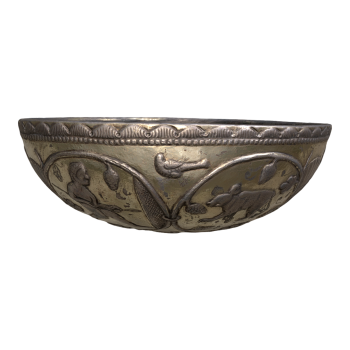
This bowl is a cultural relic from the Sassanid Dynasty (224-651 AD), originating from Iran. It is made of silver and has an overall size of 5 x 13.4 centimeters. The people of the Sassanid dynasty attached great importance to the enjoyment of life. It is said that a good Zoroastrian should divide his day into three parts: farming, philosophical thinking, and eating, resting, and enjoying. The abundance of luxury goods in the Sassanid dynasty proves their emphasis on the last part of life. This bowl is currently housed in the Cleveland Museum of Art in the United States.
Pharmacist's bottle for Byzantine syrup

Pharmacist's bottle for Byzantine syrup

This pharmacist's bottle is used to hold Byzantine syrup. Made in early 17th century Italy. The bottle is made of baked clay and covered with tin lead glaze, with a height of 21 cm. They are manufactured using technology originating from the Middle East. Over time, this technology also spread in the Iberian Peninsula and later in Italy. During the Renaissance, these regions' Magiolicas were particularly popular and became artistic symbols of that period. It is now housed in the Pharmacy Museum at the Jagiellonian University School of Medicine in Krakow.
Male statue from Cyprus

Male statue from Cyprus

This statue is the upper half of a huge limestone statue depicting a bearded man, possibly an worshipper or priest. The statue depicts a standing figure wearing a pleated robe, with a cloak draped over his left shoulder and a serrated fold at the edge. This statue can be traced back to 450 BC to 425 BC, with a height of 1.04 meters. The complete statue is at least 2 meters high. The statue comes from Cyprus, possibly from the Temple of Apollo, and is now located in the British Museum.
Inscribed clay tablets from the Third Dynasty of Ur

Inscribed clay tablets from the Third Dynasty of Ur

The length of this mud board is 14.10 centimeters and the width is 2.80 centimeters. There are four columns of inscriptions on this clay tablet, which come from the Third Dynasty of Ur. The Third Dynasty of Ur, also known as the Neo Ur Empire, was established by the Sumerian city-state of Ur and ruled over the entire Mesopotamia from 2112-2004 BC. The two corners and left side of the mud board have been broken. This mudboard may have been found in the Umma area of Ur city. The inscription on this clay tablet may be related to the Shulgi of the Drehem calendar.
Boxes from My ś lenice's leather goods store

Boxes from My ś lenice's leather goods store

This artifact belongs to the Leather Goods Guild of My ś lenice, a centuries old institution whose presence in the town can be traced back to the Middle Ages. The guild box is a beautifully decorated item with symbolic elements typically associated with specific crafts. Boxes also have practical uses: storing valuable items such as celebration cups, documents, and seals. This cultural relic is currently on display at the "The Greek House" regional museum in My ś lenice.
Goldfish shaped root

Goldfish shaped root

Genfu is a type of miniature sculpture art from the Edo period in Japan (1615-1868), commonly used for decorating and securing small items hanging on kimono belts. This goldfish shaped rootstock is made of boxwood by rootstock sculptor Masanao Ise, and the eyes are set with light and dark keratin. This root has a width of 5.5 centimeters and is located in the British Museum. Masanao Masanao (Ise) was a famous root carving artist during the Edo period in the 19th century. His works usually depict animals, and he is considered one of the greatest artists in the art form of Genfu.
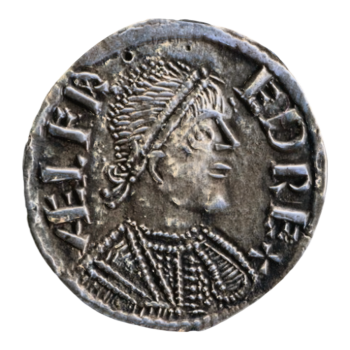
Alfred the Great's Silver Coins

Alfred the Great's Silver Coins

Alfred the Great (849-899 October 26, 1999) was the king of the Kingdom of Wessex during the Anglo Saxon period of England, and the first person in British history to call himself the "King of the Anglo Saxons" and truly live up to his name. In 886 AD, Alfred recaptured London from Danilao and began issuing silver pence featuring his portrait. This is considered the beginning of the continuous development history of the Royal Mint. To celebrate the 1150th anniversary of one of the most influential monarchs in British history becoming king, the Royal Mint announced today the launch of a commemorative coin collection in honor of Alfred the Great.
The Nereid Monument, British Museum

The Nereid Monument, British Museum

Nereid Monument, a sculpture tomb from Lysia, is located in Santos, near Fetshiya, Türkiye today. It takes the form of a Greek temple, decorated with carved reliefs on its pedestal, and is believed to have been built in the early 4th century BC (around 390 BC) for Arbinas (Erbbina or Erbinna in Lysian), the ruler of the Shantos dynasty that ruled Silesia under the Achaemenid Empire. This sculpture is currently housed in the British Museum.
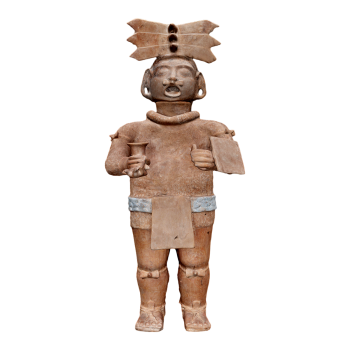
Xipe T ó tec Mexican Cultural Sculpture

Xipe T ó tec Mexican Cultural Sculpture

This ceramic sculpture represents the god Xipe T ó tec ("Our Master, the Skinned Man"). It was discovered by Swedish archaeologists in 1932. This sculpture is currently housed in the Teotihuacan exhibition hall of the National Museum of Anthropology (MNA) in Mexico. Xipe T ó tec is a god of life, death, and resurrection in Mexican culture, as well as a god of agriculture, plants, the East, disease, and goldsmiths. This sculpture has two different human bodies: a complete human body below, and on top of it is the skin and some tissues of a victim.
Colorful ceremonial tray from the lobby of Tomb No. 2 in the state of Oaxaca, southern Mexico
Colorful ceremonial tray from the lobby of Tomb No. 2 in the state of Oaxaca, southern Mexico

This is a cultural relic located at the National Museum of Anthropology in Mexico. This artwork is a colorful ceremonial plate from the front chamber of the second tomb in Zaachila, Oaxaca state. This type of ceremonial plate is usually used in special ceremonies or celebrations, and may be used to worship deities or ancestors, or as a symbolic gift.
Statue of Neptune

Statue of Neptune

This is a work by French sculptor Antoine Coysevox, named 'Neptune'. This artwork is a marble sculpture, measuring 1.85 meters in height, 1.77 meters in length, and 1.11 meters in width. This work is one of the "River" sculpture groups in Mally Park, opposite the Aphrodite sculpture at the bottom of the waterfall, now located in the Louvre Museum in France.
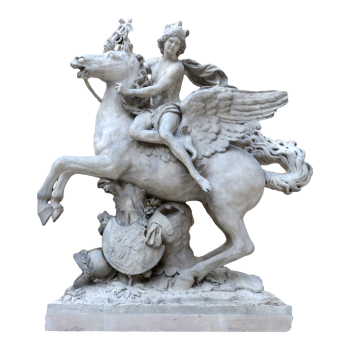
Statue of Mercury on a Flying Horse

Statue of Mercury on a Flying Horse

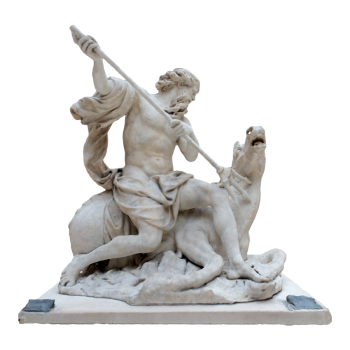
This sculpture is the work of French sculptor Antoine Coysevox and is currently housed in the Louvre Museum. This work was created between 1698 and 1702, depicting the scene of Mercury riding a flying horse. The height of this sculpture is 3.15 meters, the width is 2.91 meters, and the depth is 1.28 meters. It is made of Carrara marble.
Caesar portrait statue

Caesar portrait statue

This is a statue from the Roman period, dating back to around 50 AD. This statue is from the Athena Temple of Priene in modern Türkiye. The height of the statue is 39.5 centimeters. This statue is believed to be a portrait of Caesar. However, there has been controversy in the academic community regarding the true identity of this statue. This portrait is currently housed in the British Museum.
Statues of Ancient Asia

Statues of Ancient Asia

Ancient Asia was the ruler of the city-state of Lagash, ruling from 2144 BC to 2124 BC. His statue shows a very exquisite level of craftsmanship at that time. These statues were commissioned by Ancient Asia, who was dedicated to rebuilding the large temple of Lagash and installing his own statue in it. This sculpture is currently housed in the British Museum.
Anglo Saxon cremation urn

Anglo Saxon cremation urn

This cultural relic was unearthed on Mount Love in Lincolnshire, England. It is 155mm high and 180mm in diameter. There is a rune inscription (Si 동æ b æ d - a person's name) on this urn, which is one of the earliest Old English scripts. This cultural relic is currently housed in the British Museum.
Sculpture of King Idrim

Sculpture of King Idrim

This statue depicts the 15th century BC Alalakh (Türkiye place name) King Idrimi. In 1939, the British explorer Sir Leonard Woolley found this statue in a temple. After the destruction of Alalakh in 1200 BC, the statue was buried in a pit. The statue is engraved with vivid descriptions of Idemi's life and achievements, including the events that led to his escape from Syria and the circumstances that led to his spectacular return. This inscription is considered one of the most important cuneiform inscriptions discovered so far. This sculpture is currently housed in the British Museum.
Philopoemen Statue

Philopoemen Statue

The Philopoman statue is a marble sculpture, measuring 2.29 meters in height, 0.91 meters in width, and 0.98 meters in depth. The statue was created by French sculptor David d'Angers and is currently housed in the Louvre Museum.
Night Queen Bernie Relief

Night Queen Bernie Relief

Bernie, also known as the 'Queen of the Night', is a Mesopotamian clay relief that may represent Ereshkigal or Ishtar. This relief was created during the Isin Larsa or Old Babylonian period, measuring 49.5 centimeters in height and 37 centimeters in width. It depicts a naked, winged goddess with bird claws and owls on both sides, standing on two lions. This relief is now on display at the British Museum in London, which dates its creation between 1800 BC and 1750 BC.
1 2 Next